In Decision ToolsView all tools →
The Clearing Decision Map
Medicare isn't confusing because it's complicated. It's confusing because no one told you the order. Here's the order.
You'll walk four steps: You · The Fork · The Window · Move or Stay.
Step one
What you need it to do
Step two
Two doors, one choice
Steps three & four
The window, and living with it
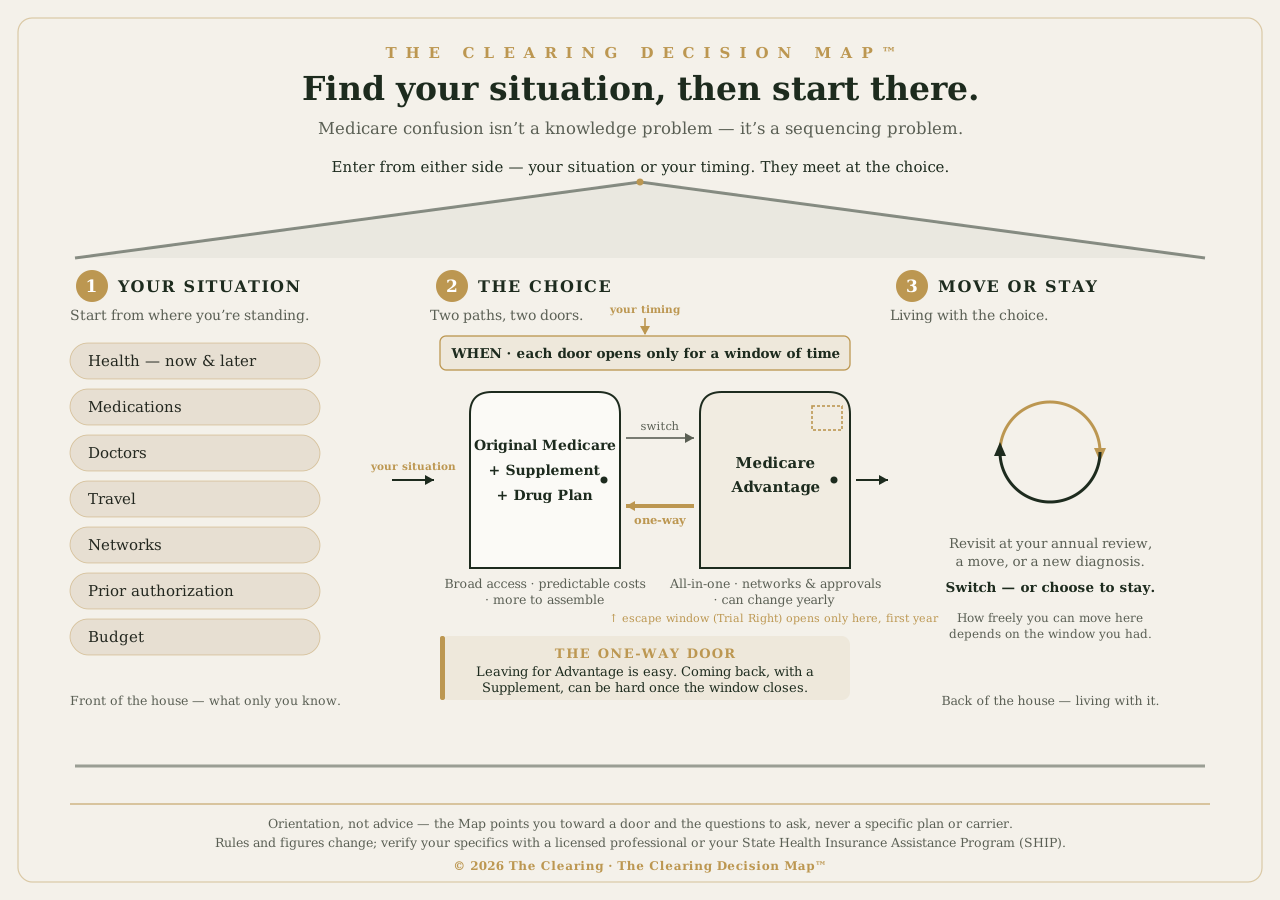
One scene: your situation, the two doors, the window each opens in, and living with the choice. Enter from either side — your situation or your timing. They meet at the choice.
Everyone else starts from a plan and reasons toward you. We start with you, and let the plan follow.
Step one · You
Before any plan name, the questions are about you: the doctors you want to keep, the medicines you take, how you travel, what a hard year would do to you, and what you can spend. These answers are your framework — the spec the right plan has to meet.
Step two · The fork
Path A
Broad provider access · separate drug coverage · more predictable cost-sharing · more pieces to assemble.
Path B
All-in-one · networks and prior approvals · benefits can change year to year.
A door inside a door
Inside Advantage, your door still matters — PPO and HMO are different access structures (networks, referrals, out-of-network costs). That's a choice within Path B, not a third path.
No golden egg. Neither is better — they trade different things: access, cost, flexibility. The right one is whichever matches the framework you just built.
Step three · When
Starting Medicare has its own timing. The Medigap open-enrollment window is a one-time, roughly six-month period when, in many cases, insurers can't turn you down for health reasons. The Advantage trial right is a time-limited escape window. And changing later runs through annual enrollment and state-specific Medigap rules.
The one-way door
Leaving Original Medicare for Advantage is easy. Coming back — buying a Supplement again — can be hard once your window closes. That's the one-way door, and it's the most important piece of timing in the whole decision.
Step four · Living with it
Revisit at your annual review, a move, or a new diagnosis. How freely you can move later depends on the window you had.
The whole map, in one scene
Your situation on the left, the two doors in the middle, the window that opens each, and living with the choice on the right. Enter from either side; they meet at the choice.
Orientation, not advice — the Map points you toward a door and the questions to ask, never a specific plan or carrier.
Where the map ends, and you begin
The public map can't tell you what your doctors accept, how your prescriptions price out, what your state allows, whether your window is still open, or which questions to ask before enrolling. That's the part Fern helps you apply — privately, with nothing to sell.
When I went through this myself, the map wasn't what I was missing — the order was. Once I could see the four steps, the noise quieted and the decision felt like mine again. That's all this is meant to do: hand you the order, then walk the rest with you, at your pace, with nothing riding on what you choose.
— Dan League, The Clearing
Your next step
Find Your Starting Point turns the seven factors into your own baseline leaning — and the questions to verify before you choose. Seven questions, about five minutes, nothing to sell.
Ready to go deeper? Join The Clearing →
Once you're ready · with membership